Loading...
How Bagua is used in Feng Shui
Part 2: How Bagua is used in Feng Shui
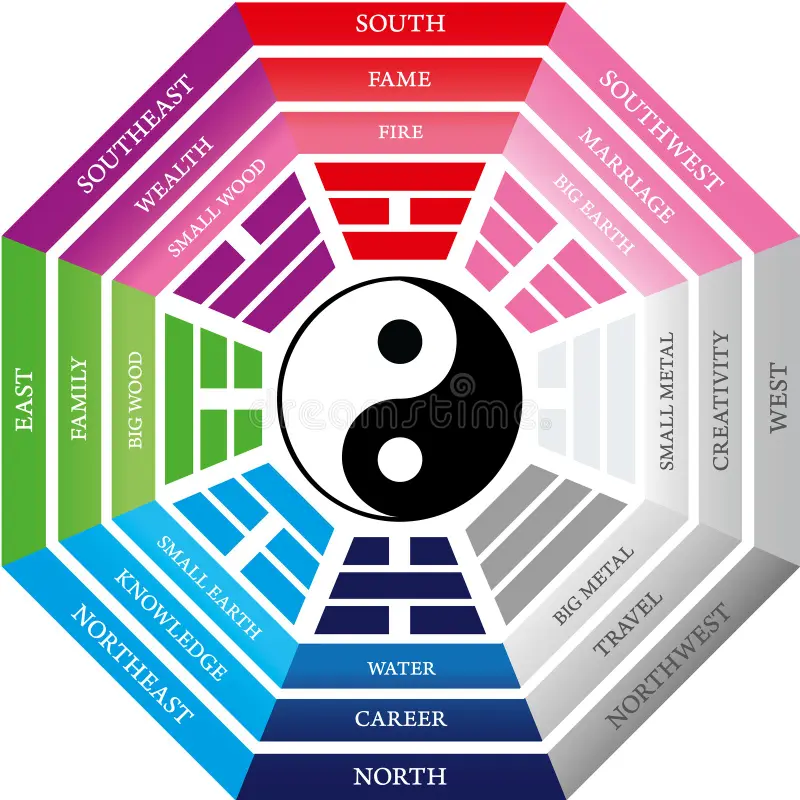
Picture 1.2: Bagua diagram and the corresponding life aspect
Feng Shui & Bagua Diagram
In Feng Shui, the Bagua diagram is used to map a space—such as a home, office, or garden—to analyze and balance the flow of energy (Qi). It divides the space into eight sectors, plus a central area, with each sector corresponding to a trigram, a direction, a life aspect, and an element (Wood, Fire, Earth, Metal, or Water). By understanding these connections, practitioners can enhance positive energy and reduce negative energy.
How It’s Applied
Mapping a Space: A practitioner overlays the Bagua on a floor plan. Usually, the bottom of the map aligns with the main entrance, but some schools align it with cardinal directions.
Identifying Areas: Each room or sector corresponds to a life aspect. For example, the southeast (Xun) affects wealth and prosperity.
Balancing Qi: If a sector is weak, cluttered, or blocked, the Feng Shui practitioner may adjust elements, colors, or objects to enhance energy. For instance:
Place a water feature in the north (Kan) to strengthen career energy.
Add plants or wooden objects in the east (Zhen) to support health.
Use fire elements (candles, red objects) in the south (Li) to boost fame or recognition.
Principles Used
Five Elements (Wuxing): Wood, Fire, Earth, Metal, Water interact according to cycles of generation (enhancing) and control (restraining).
Yin-Yang: Each trigram has yin and yang lines, representing balance.
Qi Flow: The goal is to ensure smooth, harmonious movement of energy throughout the space.
Practical Example
A house’s southeast sector is cluttered. Wealth energy may be stagnant.
Solution: Add healthy plants (Wood element) or symbols of prosperity to activate the Xun sector.
In short, the Bagua in Feng Shui acts like a blueprint of life energy, showing which areas of a space correspond to specific life aspects and how to adjust them for balance and harmony.
Beyond Feng Shui, in spiritual or martial arts contexts, the Bagua also describes the flow of energy and the interactions between the Five Elements.