Loading...
Five Elements. Refer to Chapter 17
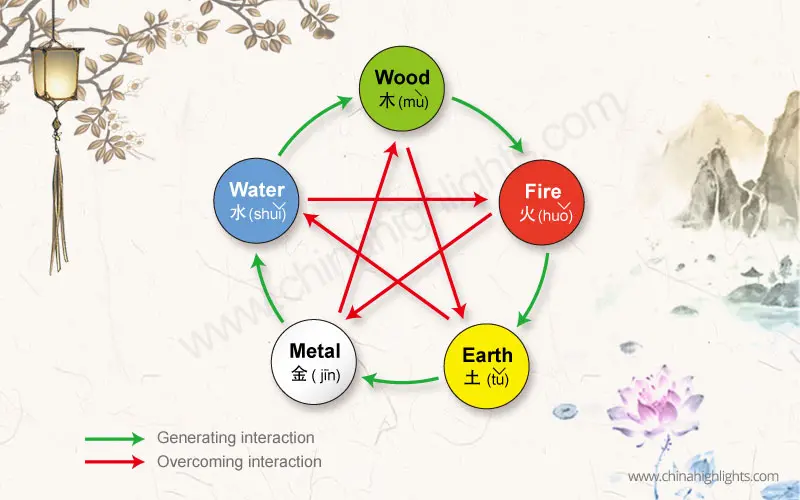
Picture 1.1 The Five Elements and their relationships
The Five Elements (五行, Wǔ Xíng) are a cornerstone of Chinese philosophy, medicine, astrology, and martial arts. They describe the dynamic interactions of natural forces, encompassing not just physical substances but also processes, qualities, and relationships.
In Chinese cosmology, each element corresponds to a specific direction, reflecting its characteristics and the cycles of the seasons.
Wood (木, Mù) governs the East, embodying growth, flexibility, expansion, and creativity; it is associated with spring, the Liver (Yin) and Gallbladder (Yang), anger, and symbolizes new life, upward movement, and vitality.
Fire (火, Huǒ) rules the South, representing heat, activity, passion, and transformation; it corresponds to summer, the Heart (Yin) and Small Intestine (Yang), joy, and symbolizes light, warmth, energy, and growth to peak.
Earth (土, Tǔ) occupies the Center, embodying stability, nurturing, balance, and grounding; it aligns with late summer or transitional periods, the Spleen (Yin) and Stomach (Yang), worry or pensiveness, and symbolizes fertility, support, and central balance.
Metal (金, Jīn) governs the West, reflecting strength, rigidity, contraction, and clarity; it corresponds to autumn, the Lungs (Yin) and Large Intestine (Yang), grief or sadness, and symbolizes purity, structure, and inward focus.
Water (水, Shuǐ) rules the North, embodying fluidity, adaptability, depth, and stillness; it is associated with winter, the Kidneys (Yin) and Bladder (Yang), fear, and symbolizes wisdom, reflection, and potential energy.
These directional correspondences are widely applied in feng shui, traditional medicine, astrology, and cultivation practices to harmonize energies with the natural order.
In Chinese fantasy and cultivation novels, the Five Elements often define a character’s abilities. Each element governs certain types of energy, attacks, or affinities, shaping the way power is wielded and influencing a cultivator’s growth.
__________________________________________________________________________________________________________________________________________________
Wood (木): Growth, expansion, vitality. Attacks often take forms of vines, roots, or energy that spreads and entangles. It’s also associated with movement and speed.
Fire (火): Destructive, explosive energy. Fire attacks are blasts, flames, or energy waves that burn or incinerate.
Earth (土): Stability and defense. Earth attacks can raise walls, create quakes, or hurl rocks—they are often slow but heavy and crushing.
Metal (金): Sharpness and cutting. Metal-based attacks involve swords, blades, or energy projectiles that pierce or slice.
Water (水): Fluidity and adaptability. Water attacks flow, wrap around, or freeze to immobilize or damage. Water can also enhance longevity, healing, or stealth abilities.