Loading...
Bagua Diagram with its corresponding elements
Part 1: Bagua Diagram with its corresponding elements
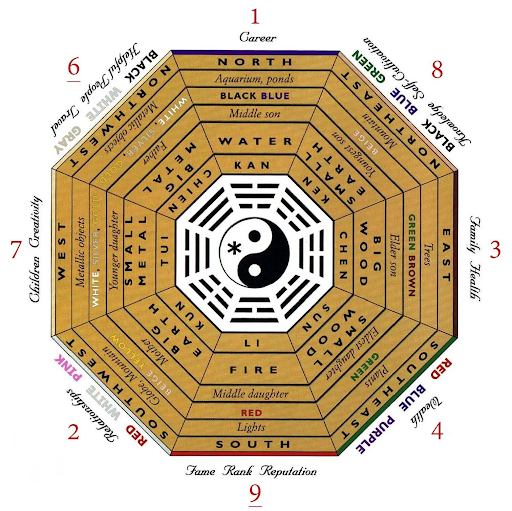
Picture 1.1: A Bagua diagram with its corresponding elements
The Bagua consists of eight trigrams, each associated with a cardinal or intercardinal direction, a natural element, a family member, a season, and certain natural phenomena.
A Bagua diagram is a symbolic chart used in Chinese philosophy, Feng Shui, and Taoist cosmology. It represents the Eight Trigrams (Bagua, 八卦), which are eight patterns made of three lines each—solid (yang) or broken (yin). Each trigram corresponds to natural phenomena, directions, elements, seasons, family roles, and other symbolic meanings.
In practice, the Bagua diagram is usually drawn as an octagonal map (or sometimes a square with eight sectors) with each trigram placed in a specific direction:
Qian (☰) – Heaven – NW – Metal
Dui (☱) – Lake/Marsh – W – Metal
Li (☲) – Fire – S – Fire
Zhen (☳) – Thunder – E – Wood
Xun (☴) – Wind/Wood – SE – Wood
Kan (☵) – Water – N – Water
Gen (☶) – Mountain – NE – Earth
Kun (☷) – Earth – SW – Earth
Each trigram represents different forces in nature and can describe things like growth, movement, stillness, danger, or strength.
Essentially, it’s a cosmic map of natural forces, showing how different energies and elements relate to each other through directions and transformations.